
SUMMARY
While it may seem like bigger is always better, the size of your board can have a significant impact on its effectiveness. This week’s message explores why smaller, more engaged boards often make better decisions, foster greater accountability, and create stronger outcomes for the organizations they serve
We Live in a Time Where Bigger is Considered Better.
Bigger houses. Bigger cars.
More followers. More friends. More likes.
Larger. Taller. Wider.
Whatever it is, we always seem to want more.
To be sure, “bigger” is so deeply ingrained into our country’s culture that it’s often seen as a sign of excellence, status, and success.
...building strong, trust-based relationships is harder among a large group
But, when it comes to bigger, there are some exceptions.
And one of them is board size.
The 11 Pitfalls of a Board That’s Too Big.
Make no mistake: a board of directors that is too big will suffer from some serious ailments, not least of which include reduced efficiency, sluggish
decision-making, and lower levels of engagement.
But these are just the beginning.
In fact, here are 11 (yikes!) additional pitfalls of an oversized board.
- Inefficient Discussions: Large boards often have longer, less-focused meetings where it’s difficult for all members to contribute meaningfully.
- “Groupthink” and Control: Instead of collaborative governance, super-sized boards can fall victim to groupthink, or conversely, a small, powerful “clique” or, even worse, an “executive” committee may take over, leaving other members disengaged.
- Coordination Challenges: With a board that’s too big, scheduling meetings becomes difficult, and reaching a consensus on critical strategic issues is even harder with more bodies gathered around the table.
- Diffusion of Responsibility: With too many members, individual accountability decreases. Members may feel their contributions are less vital. Some will even assume “someone else” will handle the work.
- Disengagement: If members do not have a specific, meaningful, and active role (which is often the case with boards that are too big), they may lose interest in the organization.
- Lower Attendance: As board size increases, attendance tends to decline, as members feel less ownership or obligation to be present.
- High Costs and Administration: Large boards are expensive to maintain, requiring more administrative support, training, and logistical management.
- Ineffective Oversight: Large boards may struggle to adequately monitor management, particularly in complex organizations where focused, quick oversight is required.
- “Bystander” Mentality: In crisis situations, a board that is too big may not act quickly enough, as members wait for others to lead, which is particularly risky during periods of controversy and/or financial distress.
- Surface-Level Debates: Due to time constraints and the number of participants, discussions often stay at a surface level rather than providing the depth needed for critical governance.
- Lack of Cohesion: Building strong, trust-based relationships is harder among a large group, which can undermine the overall collaboration and effectiveness of the board.
Greater Impact Starts with Clarity
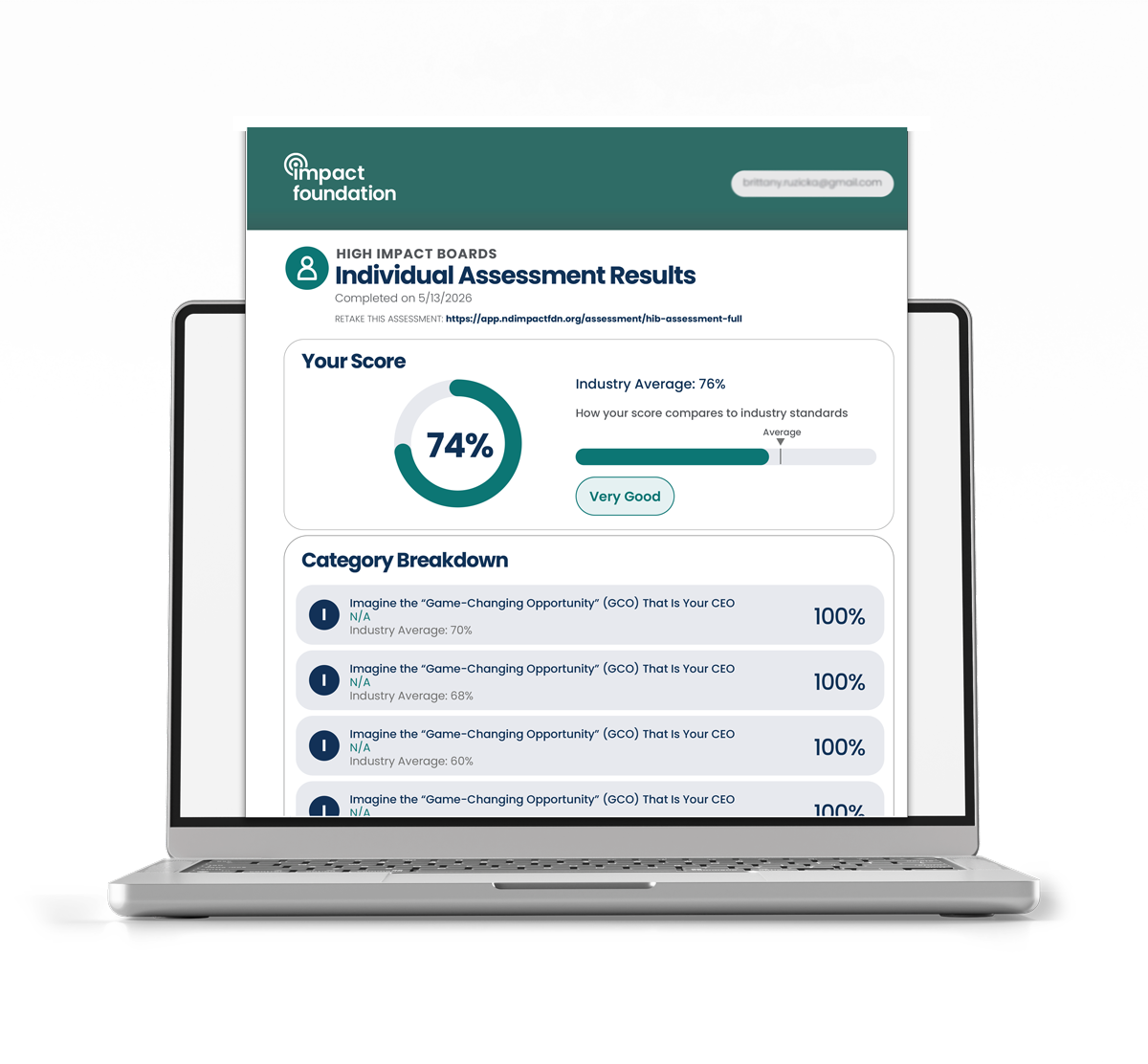
Gain a clearer picture of where your organization stands today—and what it will take to move forward with greater confidence and purpose.
5 Key Factors That Should Be Considered to Come Up WIth Your Ideal Number
While the lion’s share of advice from the so-called “nonprofit experts” advocates for a board that’s somewhere between 10-17+ members, the range is so large it’s not really all that helpful—in fact, it’s laughable.
We believe a more useful approach involves drilling down a bit.
That said, here are five key factors that will help you determine the perfect size for your nonprofit’s board.
Key Factor #1: Organization Size & Mission. A larger, more complex mission and/or a larger budget (often in the millions) require more members for broader expertise (finance, legal, program) and committee work.
Key Factor #2: Stage of Development. New nonprofits (less than five years old) often start smaller with 3-5 members, growing as they mature.
Key Factor #3: State Laws. Most states require a minimum of 2 or 3 directors—anything less and you could be in serious trouble.
Key Factor #4: Function & Workload. Some nonprofits just naturally have larger workloads (think those who run homeless shelters and food banks). Because of this, the number of directors needed will oftentimes be significantly larger than that of most nonprofits.
...building strong, trust-based relationships is harder among a large group
Key Factor #5: Decision-Making. Smaller boards (around 7) can be nimbler, while larger ones (18+) can struggle with consensus and timely decisions.
What Does the Research Say?
With these five factors in mind, let’s take a quick look at what the research has to say about the ideal size of a nonprofit’s board.
- For start-ups, the magic number appears to be 3-5.
- For established nonprofits, the number is 5-11.
- For jumbo nonprofits, the number is generally considered to be 12-15.
But here’s a fascinating twist.
A somewhat recent study conducted by the private equity firm Bain Capital found that the magic number for a board of directors is (wait for it) S-E-V-E-N.
And when the organization sets their board size at seven (give or take one), remarkable things happen.
Dreams get dreamed. Things get done. People get helped.
Nevertheless, this finding comes as kind of a stunner in light of the fact that most (yes, most) nonprofits have double this number.
And this is where things get even more interesting.
In fact, when we present the findings from this study to nonprofit CEOs and board chairs all over the country, the overwhelming objection is, “But if we only have seven directors, our meetings will suffer greatly when people don’t show up or have conflicts!”
But here’s the thing.
When you only have seven directors (or thereabouts), people do show up.
In fact, not only do they show up, but they also rarely (if ever!) miss meetings.
Why?
Because they know that they are an essential part of the process—and without their attendance (and input!) things aren’t going to get done.
Like I said, fascinating.
Extraordinary Impact
As you work to make your organization the best that it can possibly be, we encourage you to spend some time thinking about (and openly discussing!) the size of your board—and the role that each of your directors play.
In fact, because of the seriousness of this issue, we have no doubt that your investment of time, attention, and energy will bear significant fruit.
Think about it.
If you get the size of your board right, not only will this group make better decisions, but they will also make them faster.
What’s more, you will see greater ownership, increased engagement, less groupthink, and more esprit de corps.
And perhaps best of all, you’ll be far more effective in changing lives and transforming circumstances.
And that, my friends, is what it’s all about.
Thanks for all you do!