
SUMMARY
It’s hard to imagine that the device in your pocket is millions of times more powerful than the computer that helped land astronauts on the moon. But with that incredible technology comes an important question: who’s really in control—us or our screens?
From the Moon to Your Pocket
As a school kid, I remember learning about NASA putting a man on the moon in July of 1969.
To say it captivated me is an understatement.
In fact, I’ll never forget sitting in my classroom watching the film footage of that magnificent Apollo 11 rocket taking off from Cape Kennedy in south central Florida. The sheer power of the thrusters (with all that fire and smoke!!) was enough to put a serious jolt of energy into any little boy’s heart.
Four days later, on July 20th, Neil Armstrong stepped off of the lunar landing module onto the surface of the moon. “That’s one small step for man, one giant leap for mankind.”
What a remarkable accomplishment.
But here’s where things get interesting.
Your Smart Phone is Millions of Times More Powerful Than Apollo 11
I just read an article from the software maker Adobe that our smartphones are now millions of times more powerful than the Apollo 11 guidance computers.
Think about this for a moment.
One of the most difficult (and ambitious!) things you could dream about doing as a kid was being an astronaut.
...64% of Americans 4% would give up dining out for a year just to have a digital device
Now, we all carry around a device that millions of times more sophisticated (and powerful!) than the entire Apollo 11 guidance system—and it’s all in the palm of our hands.
Smart Phones Are Here To Stay
Because of their power, more than 310 million Americans now use a smart phone of some kind. This is a remarkable statistic because there are only about 330 million people in the US!
That’s a 97% penetration rate!
And make no mistake: we all LOVE our digital devices.
In fact, on average, people check their phones 144 times a day. This translates into tapping, swiping, and clicking a whopping 2,617 times each day, on average. (For the heaviest users, taps, swipes and clicks double to 5,427 touches a day.)
Greater Impact Starts with Clarity
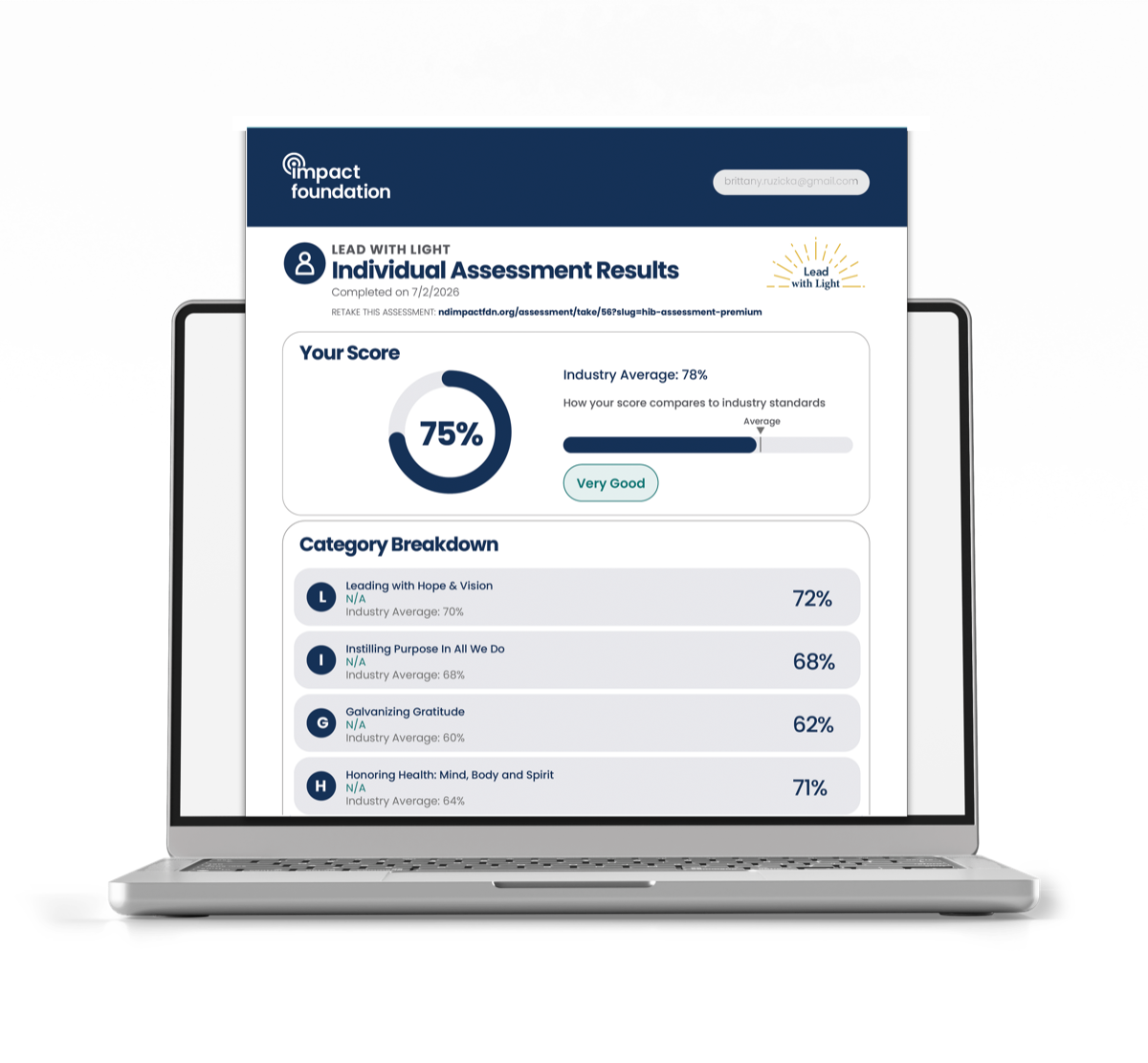
Gain a clearer picture of where your organization stands today—and what it will take to move forward with greater confidence and purpose.
But There's More To The Story
Cellphone makers, engineers, and app developers have a secret that’s only recently been revealed.
Every single time you tap, swipe, or click on your smartphone, you get a rush of dopamine (the brain’s ultimate feel-good chemical).
Here’s the rub.
Anything that makes you feel good fast increases the likelihood you’ll do it again.
And it’s working.
American adults now spend about 7 HOURS a day on digital devices and screens. Teens and tweens use an average of 9 HOURS per day of entertainment media (and nearly half say they are online on a near-constant basis!).
In fact, American’s love their digital devices so much that 64% would give up dining out for a year just to have one. Fifty-percent say they would give up their pets, and 49% would give up having one day off per week just to have a smart phone.
Needless to say, smart phones are engineered to be irresistible.
Smart Phones Are Robbing Us of the Joys of Being Human
Consider the following:
- Connecting with people online is far less emotionally fulfilling than connecting in person (leaving everyone feeling socially isolated).
- Being deluged by a tidal wave of “perfect people” photos makes all of us (especially teens and girls) view themselves negatively
- Spending more time online reduces the frequency of healthier pursuits that truly make people feel good (e.g., exercising, music, hobbies, etc.)
- Increased utilization of electronic media leads to less restorative sleep.
- Important patterns of concentration (e.g., work and learning) are significantly disrupted by repeated distractions—thus leading to poorer performance.
- More time spent online encourages people to eat less healthy, thus leading to a serious lack of mood stability.
- Because people are fiercely social beings, social media can lead to intense rumination and anxiety with respect to FOMO—Fear of missing out.
Perhaps, most concerning of all, these problems seem to be 10xed in KIDS!
The Path Forward
To counteract the harmful effects that our digital devices are having on our lives, it’s recommended that we all need about four hours of screen-free time every day.
I repeat, four hours.
...as a leader of light, your impact will not only be noticeable but it will be a light to all those around you.
During this screen-free time, we should be:
- physically spending time with others,
- taking in all the wonders of being outside nature,
- sharing meals together,
- Getting lost in great conversations,
- Reading good books,
- Thinking big thoughts,
- Dreaming big dreams,
And maybe even, just doing nothing.
Are You Addicted to Your Digital Device?
If you are wondering whether your digital device use is getting out of hand, here are a few questions to consider.
- Do you use your device at inappropriate times (e.g., during conversations and in meetings, etc.)?
- Do you use your device while dining with others?
- Do you use your device to escape from other more important matters?
- Do you use your device while driving?
- Do you use your device to stave off boredom?
- Do you use your device in the bedroom when you should be sleeping?
- Would you rather spend time online than going out with others?
- Have you ever attempted to hide your digital use while at work?
- Do you keep your cell phone near you at almost all times?
The more questions you answer “YES” to, the more problematic is your use.
Leading With Light
Moving forward, I encourage you to put some serious effort into trying to get your four hours of “screen-free” time every day.
If you do, you will start reaping some serious rewards. And as a leader of light, your impact will not only be noticeable but it will be a light to all those around you.
See light. Be light. Spread light.