
SUMMARY
Nonprofit boards often waste time on urgent but minor issues instead of what truly matters, a pattern called the “Streetlight Effect.” The fix is keeping four questions central: financial sustainability, mission impact, compliance, and leadership effectiveness. Boards that focus here engage more deeply and run far better meetings
Stop Searching Under the Streetlight
Picture this.
It’s after midnight.
A police officer, doing his ordinary rounds, discovers a man under a streetlight frantically searching for something.
The officer parks his vehicle and, with caution, walks up to the man.
In a calm voice, the officer says, “It looks like you’ve lost something.”
Without looking up, the man emphatically announces, “Yes! I’ve lost my keys!!”
The officer replies, “Let me help you. Where was the last general area you remember having them?”
Without hesitation, the man replies, “Way over there by the fence.”
Flummoxed, the officer asks, “Sir, if you last saw you keys over there by the fence, then why are you looking here under the streetlight?”
The man replies, “Because there’s more light here!”
Sounds corny doesn’t it?
However, I wouldn’t be so quick to dismiss it.
...human beings most often look for answers, truth, or solutions where they are easiest, most comfortably, and most conveniently found.
In fact, in psychological circles, this cautionary tale is known as the “Streetlight Effect.”
And it has powerful implications for the leaders of nonprofit organizations.
Let’s dive in.
The 'Streetlight Effect' Explained
Believe it or not, this story actually dates back to a 13th-century parable about Mulla Nasruddin, a famous Sufi mystic.
In that version, Nasruddin loses his keys in his house, but he searches outside because the sun is shining brightly.
The meaning of this cautionary tale is both obvious and profound.
Human beings (and this includes you as nonprofit execs and directors!) most often look for answers, truth, or solutions where they are easiest, most comfortably, and most conveniently found—rather than looking for where the answers actually reside.
Now, if you think all of this is just word salad, let me give you a powerful example of how this applies to you as leaders of your charities.
Heartbreakingly, recent research tells us that most (yes, most!) nonprofit CEOs AND their boards invest the lion’s share of their time together taking on issues that—in the grand scheme of things—don’t really matter.
Said differently, and with this parable firmly in mind, most nonprofit boards spend almost all their time on their hands and knees searching aimlessly under the streetlight.
So, now you ask, “Why in the world do boards do this? I mean, after all, if the real answers lie somewhere else, why doesn’t the board just look there.”
Great question!
Unfortunately, you are not going to like the answer.
Board members spend far, far, FAR too much of their precious time looking in all the wrong places because (gulp!) this is where the CEO’s most “urgent” priorities reside.
For example, if there’s a misunderstanding with a donor, an emergency board meeting gets called.
If a staff member gets a burr in their saddle, the issue gets pushed to the top of the agenda faster than Michael Jackson’s Thriller scaled the charts in 1983.
If a computer crashes, the entire board moves to DEFCON 1 and remains there until the issue gets resolved.
As you can see, boards waste their time under the street light because the CEO’s most “urgent” issues rarely equate to the “important” items that need the most attention.
Ugh.
Greater Impact Starts with Clarity
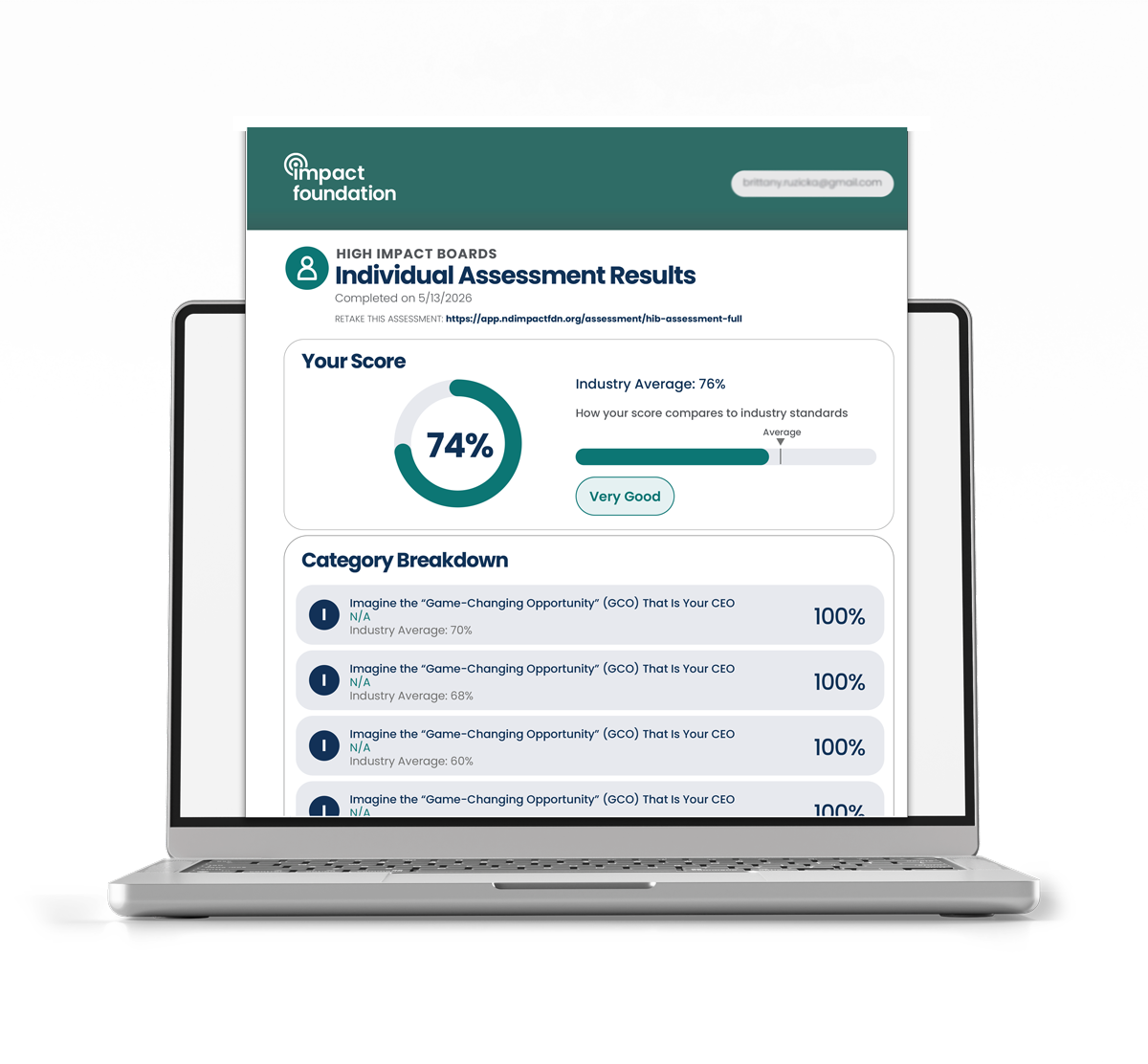
Gain a clearer picture of where your organization stands today—and what it will take to move forward with greater confidence and purpose.
Four Questions That Automatically Move Your Directors From ‘Urgent’ to ‘Important’
To move your board from ‘urgent’ to ‘important,’ you simply need to keep four questions front and center.
Essential Question #1:"Do we have the money we need to survive and thrive?"
This is a hugely “important” question that every board needs to (and wants to!) wrestle with.
In fact, by taking a position on your board, every director is overtly telling you they want to help you ensure long-term viability by helping you build a budget that is both realistic and sustainable.
To do this, you need to keep them abreast of current cash reserves (months of operating cash on hand), actual revenue vs. budget, and fundraising progress.
What’s more, you need to give your directors the time to talk about this question (and I mean to really wrestle with it, poke holes in it, and ultimately reconcile it!).
Essential Question #2: "Are we actually making an impact?"
This is where the rubber meets the road.
In fact, I’ve never met a nonprofit director that wants to amass a war chest simply to sit on it. Rather, great directors want to help you build a financially strong organization because then there are more resources that can be deployed to change lives and transform organizations.
To engage your directors, you’ll need to provide them with the proof that your programs and initiatives are working and that the organization is effectively executing its mission.
This means keeping them in-the-know about client reach, qualitative success stories, and outcome data rather than just output numbers (e.g., measuring changed lives, not just meals served).
Essential Question #3. "Are we legally and ethically compliant?"
To further keep your directors dialed in on the issues that matter most to your charity, you need to give them the confidence that you and your organization are following all federal, state, and local laws to protect your charity’s tax-exempt status and public reputation.
This means the timely filing of your 990’s, keeping your bylaws up-to-date, and maintaining active conflict-of-interest policies, just to mention a few.
Remember, you will not elicit your board’s best thinking if they are always worried about when the next shoe is going to drop.
Essential Question #4. "Is our leadership team effective?"
Last but not least, to keep your directors dialed in, you’ll need to give them time to not just think about your organization’s big dream, but who’s actually going to get the work done!
...great board members want to look for all the right things - in all the right places - even if it means doing some hard and arduous work.
To help your directors stay focused, not only will you need to let them wrestle with the organization’s vision but you will also need to keep them abreast of things like staff turnover rates, executive performance evaluations, and succession planning.
In Search of Extraordinary Impact
A number of years ago, I had a board chair that sternly reminded me that “Things happen because (as the CEO of the organization) I allowed them to happen.”
I could have easily taken offense at his rebuke. But, as the head of one of the largest companies in America, this guy knew exactly what he was talking about.
And what he was really telling me was this: Good people do not want to waste their time crawling on all fours under the streetlight looking for stuff that doesn’t matter.
Instead, he was reminding me that great board members want to look for all the right things—in all the right places—even if it means doing some hard and arduous work.
I can honestly say that I took his words to heart—and from that day forward, I never confused “urgent” with “important.”
And here’s the really cool thing.
When he left my board after an almost decade-long tenure, he told me that our board meetings were the very best that he ever attended.
If you keep the previously-mentioned four questions front and center, I know in my heart of hearts that your departing directors will tell you the same thing.