
SUMMARY
Great board meetings don’t happen by accident—they’re intentionally designed by the CEO and Board Chair to engage directors and move the organization forward. This article outlines a seven-step framework for running effective meetings, from thoughtful preparation and a clear meeting preamble to meaningful discussion, reflection, and a strong close. The greatest amount of time should be spent engaging board members in strategic conversation, where their experience and perspectives can have the biggest impact. By following this blueprint, nonprofits can create more productive meetings, stronger boards, and ultimately, greater mission impact.
Make no mistake: Your board meetings matter—a lot
In fact, successful board meetings are the vehicle by which you engage—and bring out the best—in your directors.
As a result of a well-executed meeting, not only do your directors feel fulfilled and valued, but the organization moves forward by leaps and bounds.
And never forget: Ultimately, it’s the outcomes of your board meetings that result in extraordinary impact for your nonprofit organization.
But don’t miss this.
Two people (and two people only!) have the responsibility to make sure that each meeting is purposeful, engaging, and flawlessly delivered.
And these two people are the CEO and Board Chair.
Now obviously, you’ll have help from a lot of people around you (e.g. your assistants, staff, and maybe even your invited guests), but the content, delivery, flow, and interaction are all on the CEO and the Chair.
Now, if this sounds like a significant responsibility, well guess what…it is.
Get it right and your directors will LOVE you. Get it wrong and you’ll never really capitalize on all that they have to offer.
Fortunately, there is a method to the madness.
In fact, in this edition of High Impact Boards, we’re going to share with you a bulletproof blueprint to help you make sure that your next meeting comes off without a hitch.
Step 1: The Preparation
The first step in delivering the perfect board meeting is all about preparation.
In fact, great board meetings are a direct result of two things:
- Making sure that your fellow directors know the “when and where”.
- They receive the essential materials and documents that they need to bring their “A” game.
Specifically, there are some non-negotiables that need to be attended to in this step.
...Remember, if you want maximum engagement, people need time to prepare!
First, because your directors are successful, talented, and BUSY people, you’ll need to make sure that all of them have the date of your next meeting at least eight weeks in advance (ideally, you should already have an annual calendar that lays out the dates for the entire year!).
This way, each of your directors has plenty of time to ensure that nothing conflicts with your gathering.
Oh, and by the way, each director should receive a friendly reminder about a week in advance, just as a precaution.
But there’s more.
Each director should receive the board packet (e.g., the agenda, financials, what specific motions will be introduced, and all supplemental reading materials) at least 10 days in advance.
Remember, if you want maximum engagement, people need time to prepare!
Step 2: The Preamble
With your preparation completed, it’s time to proceed to the delivery of the actual meeting.
Specifically, every great board meeting begins with a Preamble.
Simply stated, the word “preamble” means “before” (pre) and “we walk” (amble).
Thus, your meeting’s preamble is how the CEO and Board Chair are going to jointly set the stage for what is about to occur during the meeting.
Logistically, your preamble should include:
- The purpose of your meeting: Why are you here?
- The most important outcomes: What are you hoping to accomplish?
- The resolutions: What decisions will you need to make before the meeting is over?
- The invitation: How do you want your directors to participate and interact?
Now don’t miss this.
Your meeting’s preamble should take no more than ten minutes!
Remember the three “Be’s”: Be brief, Be bright, and Begin.
Step 3: The Paperwork
With the preamble to the meeting successfully delivered (by both the CEO and Chair!), it’s time to focus the board’s attention on the specific paperwork that needs to be approved before the board dives into the meat of the agenda.
Before proceeding, it’s worth mentioning the notion of a “consent” agenda.
As you might recall, a consent agenda is a board practice that groups routine approvals and reports into one agenda item. This way, the consent agenda can be approved in one action, rather than filing motions on each item separately.
Here’s the takeaway: Using a consent agenda can save you anywhere from a few minutes to half an hour!
Most often, there are just two elements to the consent agenda: the previous meeting’s minutes and the financials.
That’s it.
And if you do it right, it should take you no more than five to six minutes to complete this portion of the meeting.
Remember, low-performing nonprofits spend copious amounts of time here, while the extraordinary ones get on to the business of taking the charity to the next level!
Be extraordinary!
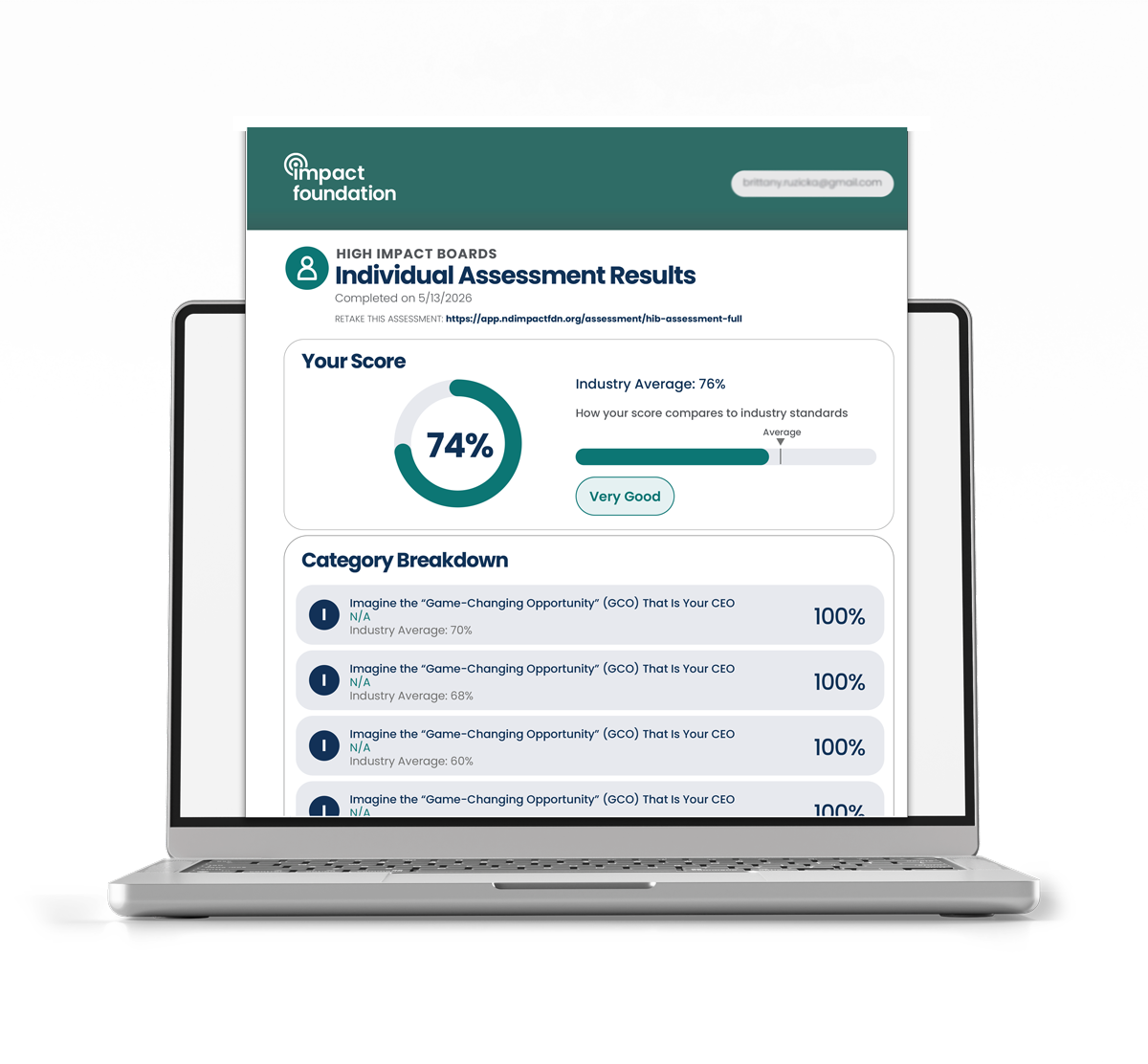
Greater Impact Starts with Clarity
Gain a clearer picture of where your organization stands today—and what it will take to move forward with greater confidence and purpose.
Step 4: The Progress
Having successfully addressed the preamble and the paperwork, it’s now time to turn the board’s attention to the progress that’s been made since the last meeting.
And in this portion of your meeting, the charity’s CEO (and/or staff and committee chairs) will lead meeting participants in a walk-through of the annual plan and the accompanying scorecard.
Specifically, there are two main elements to this portion of the meeting:
- The status of the annual plan: Are things proceeding as anticipated?
- The proof: What are the highlights and dashboard metrics that capture this?
This portion of your meeting should take no more than 10 minutes—and if you do it right, your directors will be super-stoked by the great things that have transpired since the last gathering.
Step 5: The Participation
Having successfully completed the previous four steps, it’s now time to turn your attention to the fifth—and most important—step of the entire meeting: the participation.
In this portion of the meeting, your PRIMARY FOCUS (yep, all caps!) is to engage your directors (and guests) in a meaningful and spirited conversation—one that will challenge everyone to bring their “A” game to the table.
And here’s the newsflash: It’s the job of the Board Chair and the CEO to pose the perfect question(s) to the board so that you give your directors exactly what they came for—meaningful interaction!
To do this portion of the meeting right, you’ll need to address three things:
- The prompt: What burning question do you have for your directors, and why did you choose it?
- The permission: Do your directors know that they have your blessing to communicate courageously?
- The pursuit: Is everyone engaged in the conversation? (If not, it’s your job to get them into the mix!)
So, how much time should you spend on this step?
Well, believe it or not, the highest-performing charities spend at least 45 minutes of every meeting engaged in deep discussions!
We encourage you to do the same.
Step 6: The Performance
With the majority—and most significant—portion of the meeting now behind you, it’s time to spend five to 10 minutes critiquing, analyzing, and admiring the board’s performance!
To do this, the Board Chair should invite everyone to participate in a short, engaging, and FUN conversation that will help bring things to a fitting close.
Here are the key elements of this portion of your meeting:
- The playback: How did we do during our dialogue? Was the interaction meaningful? Was the topic meaty enough? Did everyone feel comfortable participating?
- The praise: Has the board been praised for their contributions, service, and good work? Has the board thanked the Chair and CEO for their efforts? Has the group praised the staff for their good work?
Remember: now that your meeting is nearing its conclusion, it’s essential that everyone walks away feeling GREAT!
Step 7: The Postscript
The seventh—and final step—to the perfect board meeting is the postscript.
Specifically, a postscript is the final parting thought—and, in this case, it refers to a quick executive session that will occur at the conclusion of your meeting to ensure that all the T’s have been crossed and all the I’s are dotted.
Said differently, this is the part of the meeting that the Board gets the opportunity to talk about the CEO.
Usually, this part of the meeting does not include the CEO—but this is not always the case. In fact, there are plenty of boards that love to have the CEO at the table during these interactions.
Whatever your preference, it’s essential that the board has the opportunity to engage in this conversation.
Extraordinary Impact
And there you have it.
The 7 steps to the perfect board meeting.
- The Preparation
- The Preamble
- The Paperwork
- The Progress
- The Participation
- The Performance
- The Postscript
And now here’s the Payoff (clever, huh?).
If you follow this format, you will learn what the best-of-the-best already know—greatness doesn’t happen by accident.
On the other hand, if you choose to disregard this information, you’ll be leaving a lot of important meeting items to chance, and your likelihood of achieving success will be greatly reduced.
The bottom line?
Use these seven steps as your guide!
If you do, our experience tells us that you will exceed your wildest expectations.
And, in the process, you’ll transform the circumstances of the people who need it most—your clients and constituents.
Until next time—be EXTRAORDINARY.
Thanks for all you do!